
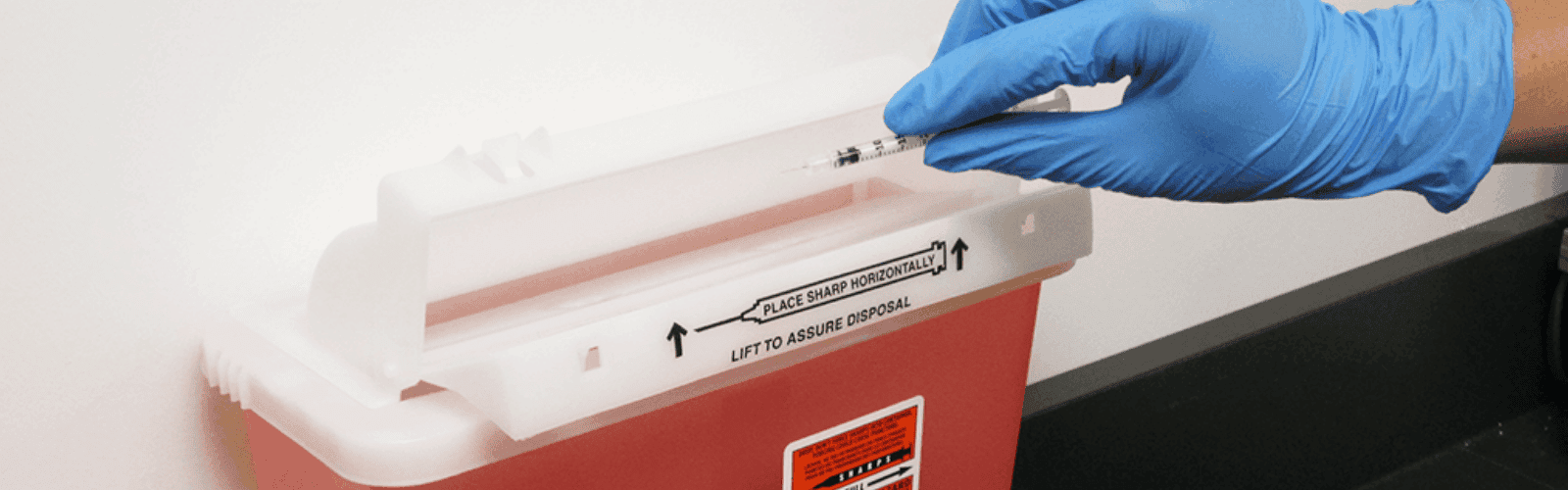
December marks International Sharps Injury Prevention Awareness Month, offering a timely opportunity to reinforce the importance of protecting healthcare professionals from needlestick injuries that can be prevented.
Healthcare practitioners routinely encounter risks from sharps-related injuries. According to the Centers for Disease Control and Prevention (CDC), approximately 385,000 needlesticks and other sharps-related injuries occur among hospital-based healthcare personnel each year.
According to a Stericycle survey, 66% of nurses dispose of sharps ten or more times daily, while another 19% do so four to nine times each day. This frequent interaction underscores the urgent need to support nurses and implement effective solutions that minimize the risk of sharps injuries. Below are five key steps to help guide the implementation of a comprehensive sharps disposal initiative at your facility.
Step One: Understand OSHA and Other Regulatory Requirements
The Occupational Safety and Health Administration (OSHA) requires healthcare organizations to comply with the Bloodborne Pathogens Standard, which includes specific guidelines for sharps containers. This standard is designed to protect workers who may be exposed to blood or other potentially infectious materials. In addition to federal requirements, each U.S. state may enforce its own rules for regulated medical waste. It is essential for healthcare organizations to stay informed of both federal and state-level regulations to ensure full compliance, maintain safety standards, and avoid penalties.
Step Two: Select the Appropriate Containers
OSHA mandates that sharps containers must be closable, puncture-resistant, leak-proof on the sides and bottom, and properly labeled with a universal biohazard symbol and the word "biohazard" or color-coded red. State regulated medical waste regulations must also be followed if there are specific labeling requirements in addition to what OSHA requires.
When choosing the right containers, there are a variety of options, including both single-use and reusable options. These containers come in multiple sizes, including 2, 4, 8, and 17 gallons, and feature different lid styles, such as vertical drop, horizontal drop, and rotating cylinder lids. Healthcare organizations can choose the most appropriate container based on the facility type and location.
Step Three: Be Strategic with Container Locations
Position sharps containers in locations where sharps are most commonly used, such as patient care areas, labs, and pharmacies, to minimize the risk of needlestick injuries.
Containers must be easily accessible to healthcare workers. In some cases, securing a sharps container to a mobile cart can improve accessibility as staff move between rooms. Observing workflow patterns helps identify strategic disposal points that support safe practices without disrupting patient care.
Step Four: Properly Install and Maintain Containers
Proper installation and ongoing maintenance are critical to maintain workplace safety. Sharps containers must remain upright to avoid tipping and should be replaced before they become overfilled.
The National Institute for Occupational Safety and Health (NIOSH) provides recommendations for wall mounting heights based on the type of workstation. For a standing workstation, the ideal mounting height is between 52 to 56 inches above the user’s standing surface. For a seated workstation, the recommended height is 38 to 42 inches above the floor on which the chair rests. These height installation recommendations from NIOSH will comfortably accommodate 95% of all adult female workers.
Container overfilling poses significant risks. Needlestick injuries are more likely to occur when containers are overfilled, and care teams are exceptionally busy or distracted. To mitigate this risk, healthcare workers should routinely check fill levels and act proactively.
Partnering with a medical waste management company like Stericycle helps hospitals ensure sharps containers are maintained and not overfilled by providing a full-service sharps waste management program with proactive container exchange.
Step Five: Training and Resources
Healthcare personnel must participate in ongoing training on the safe handling of sharps, including needles and syringes. This training is required per the OSHA’s Bloodborne Pathogens (BBP) Standard for any employees who have occupational exposure to blood or other potentially infectious materials.
The standard also dictates that facilities must maintain an up-to-date BBP exposure control plan. This plan should clearly outline potential exposure risks, preventive strategies, and procedures for responding to incidents of occupational exposure.
Evidence supports the value of effective training materials. According to a Stericycle survey, 78% of nurses agreed that instructional materials such as posters and handouts are helpful for understanding proper sharps disposal. However, 35% indicated a need for more training materials for them and other nursing staff to safely utilize sharps containers, indicating room for improvement in educational resources.
Protecting Healthcare Workers Through Comprehensive Sharps Management
Implementing these five steps creates a foundation for safer work environments when healthcare practitioners are disposing of sharps on a regular basis. A comprehensive approach that combines regulatory compliance, proper equipment selection and placement, optimal installation practices, and ongoing training helps protect the dedicated professionals who care for our communities.
Partnering with a full-service sharps waste management provider can help improve safety by mitigating the risk of needlesticks associated with overfull containers. Learn more about Stericycle's biohazardous waste disposal and sharps management services.
This article is for general information purposes only and should not be construed as legal advice on any specific facts or circumstances.