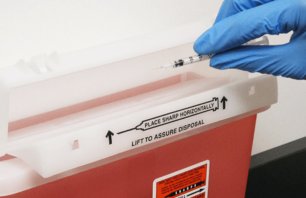

Healthcare organizations prioritize safe drug disposal to safeguard staff, patients, and the environment. While attention often centers on hazardous drugs like warfarin and opioids, propofol—a potentially dangerous drug—may be overlooked, risking staff and organizational safety.
What Is Propofol?
Propofol, also known as Diprivan, is a short-acting sedative primarily used in operating rooms (ORs) and hospitals. Anesthesiologists administer it to relax and sedate patients before surgical procedures and it can supplement general anesthetics for pain management. In intensive care units (ICUs), propofol provides long-term sedation for critically ill patients with ventilators. Sub-anesthetic doses induce psychotropic effects like addictive drugs.
Is Propofol a Controlled Substance in the U.S.?
In most states, propofol is not included on the Drug Enforcement Administration’s (DEA) schedule of controlled substances. This means all licensed physicians can access the drug without being a DEA registrant, and it is readily available in certain settings, including ORs and ICUs. However, in Alabama, Georgia, and North Dakota, propofol is scheduled and requires controlled substance registration in these states. DEA registrants need to be registered to obtain any state-regulated controlled substance. Physicians in these states are regulated by state controlled substance authorities and are not permitted to utilize propofol without a DEA registration, as they go hand in hand to possess.
Despite this federal classification as a non-scheduled drug, there is still a risk of diversion – where people steal pharmaceuticals to use for recreational purposes – abuse and addiction among healthcare providers, particularly anesthesiologists and nurse anesthetists. One American survey found about 10 cases of propofol abuse per 10,000 providers over 10 years (roughly 0.1%).
What Are the Challenges Associated with Propofol Disposal?
Propofol is often left over or wasted in hospital settings. In fact, propofol is the most commonly wasted pharmaceutical in the operating room by volume. Despite this, many hospitals do not have secure processes or designated containers for its disposal, which presents environmental and staff health risks.
Regarding the ecological impact, the lack of appropriate containers can lead to sewering—where staff members are forced to flush or pour the leftover medication down the sink. This situation makes many healthcare workers uncomfortable and violates the intent and spirit of the Environmental Protection Agency (EPA) guidance. Although scientists do not fully understand the effects of trace pharmaceuticals on humans, evidence suggests drugs in waterways may harm ecosystems and human health. It is critical that organizations avoid flushing drugs—both hazardous and nonhazardous—down the sink. This is especially important for propofol, which does not degrade in nature and is toxic to the aquatic environment.
From a staff health perspective, the opportunity for drug diversion is a concern. According to Critical Care Nurse, propofol is a drug of diversion because of its high-volume use, lack of prescribed control mechanisms, and accessibility. Because propofol is not controlled by the DEA and only regulated in a few states, staff in most locations can access it more easily than other addictive substances such as opioids. If there are not appropriate drug disposal containers in ORs and ICUs, the risk of diversion can increase and ratchet up the chances for abuse.
What Are Best Practices to Encourage Safe Propofol Disposal?
One best practice is to include propofol in current controlled substance disposal strategies to safeguard staff and the environment. Although propofol is not a DEA-scheduled controlled substance, three states classify it as Schedule IV: Alabama, Georgia, and North Dakota. Everywhere else, hospital policy may treat them as a controlled substance.
If a hospital opts to dispose of propofol as a controlled substance, it will need to incorporate the drug into current policies, emphasizing the need for equipment that facilitates secure disposal and comprehensive training to ensure staff understand the risks associated with the drug and proper disposal.
Safeguard Your Organization with Controlled Waste Disposal
Organizations may opt to use specially designed containers that immediately sequester the drug on contact and are shipped to a properly licensed incinerator. Not only does this prevent the drug from being disposed of in a landfill prior to incineration, but it also limits the opportunity for drug diversion.
Organizations should consider placing these receptacles in their ORs and ICUs where propofol is used, so staff can reach them easily without having to leave the patient care area. Hospitals and health systems should also partner with a licensed waste management vendor, like Stericycle, to remove the containers at predefined times and replace them with new, empty ones. This reduces the burden on staff and maintains worker safety by limiting contact with the waste. The waste management vendor can then properly treat the waste prior to disposal in a landfill.
What Should Staff Training for Propofol Entail?
As with other drug disposal training, staff should learn about the risks of propofol and how to safely handle the drug. Training should occur during orientation and annually as part of refreshers. Periodically mentioning the topic in employee newsletters and staff meetings is also valuable to build awareness. Weaving the topic into online training can also be beneficial as these are easy to access and are kept current with the latest regulatory information. Using real-world examples to underscore the seriousness of the issue and the need to follow defined processes can be especially helpful.
Safeguard Your Staff Now
Although the risks associated with propofol may be lower than other controlled substances, the drug still represents a hazard that hospitals and health systems should address. Learn more about how Stericycle can help ensure proper propofol and other controlled substance wastage disposal and prevent drug diversion.
This article is for general information purposes only and should not be construed as legal advice on any specific facts or circumstances.