
High-Consequence Infectious Disease Waste Preparedness
With over 35 years of experience serving hospitals and health systems through public health threats, including Ebola, SARS, and COVID-19, our Stericycle team is equipped to support your readiness and waste management needs.
High-consequence infectious diseases (HCIDs) and special pathogens pose significant risks not only to patient care and healthcare worker safety but also in the management of waste produced during the treatment of infected individuals. While some waste may be handled as regulated medical waste (RMW) or even as regular solid waste (trash), waste generated from the care of patients with certain HCIDs requires additional packaging and specialized management procedures. For instance, RMW from COVID-19 patient care could be managed as normal RMW, allowing for disposal in red bags or sharps containers like other medical waste. In contrast, waste generated from the care of an Ebola patient requires more complex packaging and handling due to the disease’s highly infectious nature and the increased risk that the waste itself may also be highly infectious. Thus, identifying the specific pathogen involved is essential when determining appropriate waste disposal options.
Identifying Special Pathogens and Waste Management Considerations
If a patient is confirmed to be infected with an HCID or special pathogen, it is essential to determine if the HCID qualifies as Category A waste to ensure the safety of all employees involved in the handling process from initial waste generation through final disposal. The U.S. Department of Transportation (DOT) defines Category A waste as material that is known or suspected to contain a pathogen capable of causing permanent disability, life-threatening illness, or death in otherwise healthy humans or animals. These wastes cannot be shipped off-site for treatment and disposal without a special permit from the DOT. Currently, there is one permit, US DOT Special Permit SP 16279, that allows the transport of waste generated from the care of patients with certain viral hemorrhagic fevers (VHFs), which only include Ebola, Marburg, and Lassa Fever. DOT-SP 16279 cannot be used to ship wastes from other VHFs or Category A wastes, nor will DOT proactively issue permits for other special pathogens; permits are only granted when a disease is identified in the United States. Additionally, not all transporters are authorized under DOT-SP 16279, so it is essential to confirm that your transporter holds this permit and is qualified to handle the waste.
While Stericycle is party to DOT SP 16279, if your facility has a suspected or confirmed Ebola, Marburg, or Lassa case, immediately contact your local and state health departments and the Centers for Disease Control and Prevention (CDC).
Next, contact your Stericycle account manager or Customer Experience team at: 866-783-7422.
Stericycle can assist you by:

1. Sharing the list of required waste supplies noted in Stericycle’s Requirements & Packaging Procedures document for Managing Category A Waste Generated During Patient Care.*

2. Supporting you with rapid ordering and shipping of Stericycle’s Category A Waste Management kits, providing waste supplies capable of supporting ~24 hours of Ebola, Marburg, or Lassa patient care.

3. Providing a Category A Waste Label kit should a positive Ebola, Marburg, or Lassa diagnosis occur.
*The list of supplies and instructions provided are to be used for the management of waste from Ebola, Marburg, or Lassa cases. If another Category A disease is identified, Stericycle will need to work with DOT to obtain a special permit. This process may require implementing new or additional packaging procedures.
Hospital Preparedness Resources
When preparing staff and facilities in the event of a confirmed case of Ebola, Marburg, or Lassa, the following resources are available for request and download to assist with training and communication.
Requirements and Packaging Procedures For Managing Category A Waste Generated During Patient Care
Information on the essential waste containers, labels, and packaging processes is available to ensure proper management. Based on the number of suspected cases and/or confirmed cases, our Customer Experience team can recommend and drop-ship the appropriate Ebola, Marburg, or Lassa waste management supplies for managing waste properly. Please complete the form to the right to download this resource.
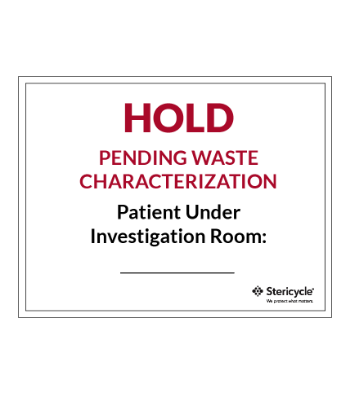
Ebola, Marburg, or Lassa Waste Procedures Alert Label
Use a print-ready resource to affix to waste containers according to hospital policy while awaiting patient diagnosis. We recommend labeling waste in accordance with Ebola, Marburg, or Lassa requirements only after a patient’s diagnosis has been confirmed. Managing regulated waste resulting from Ebola, Marburg, or Lassa patient care is more expensive for hospitals and requires specialized handling procedures by Stericycle and our partners.
Download Ebola Waste Management Requirements and Packaging Procedures
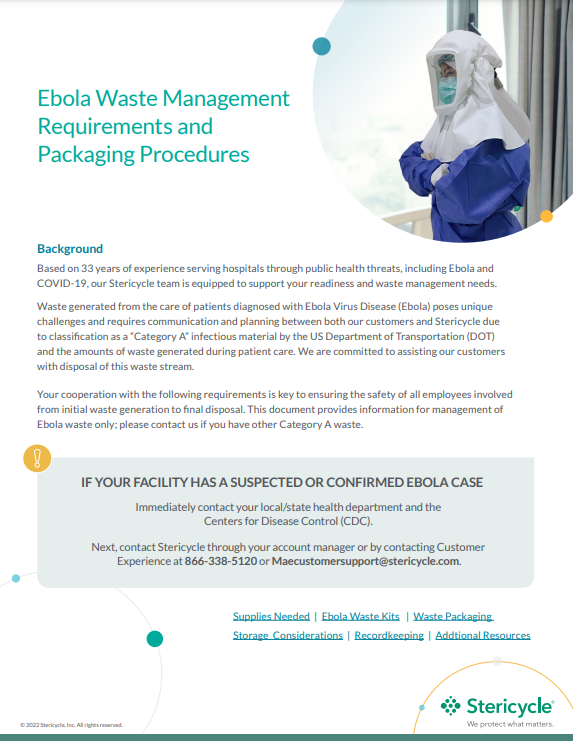
Waste generated from the care of patients diagnosed with Ebola, Marburg, or Lassa is classified as "Category A" infectious material by the U.S. Department of Transportation. During Ebola waste management in 2014, we learned that a single patient will generate eight to ten 55-gallon drums of waste per day. Our nationwide network of team members, facilities, and partners is prepared to rapidly respond with supplies should a positive Ebola test occur at your hospital.
We take pride in caring for the health and well-being of the people we serve and the environments in which care is provided.
Please contact Stericycle Customer Experience at 866-783-7422 for urgent needs or questions.
Additional Resources

The National Emerging Special Pathogens Training and Education Center (NETEC) has additional resources on the management of special pathogens waste in healthcare. Click here to find out more.

Stericycle regulatory experts Alex Chapman and Cara Simaga joined NETEC to discuss the management of special pathogens waste. Click here to listen to the podcast.

The U.S. Department of Transportation provides planning guidance for handling Category A solid waste. Click here for their guide.